DHI Hair Transplant
DHI (Direct Hair Implantation) is one of the most advanced and precise hair restoration techniques available today. Designed to deliver natural, dense, and long-lasting results with minimal downtime, DHI has become a preferred choice for patients seeking a refined, comfortable hair transplant experience.
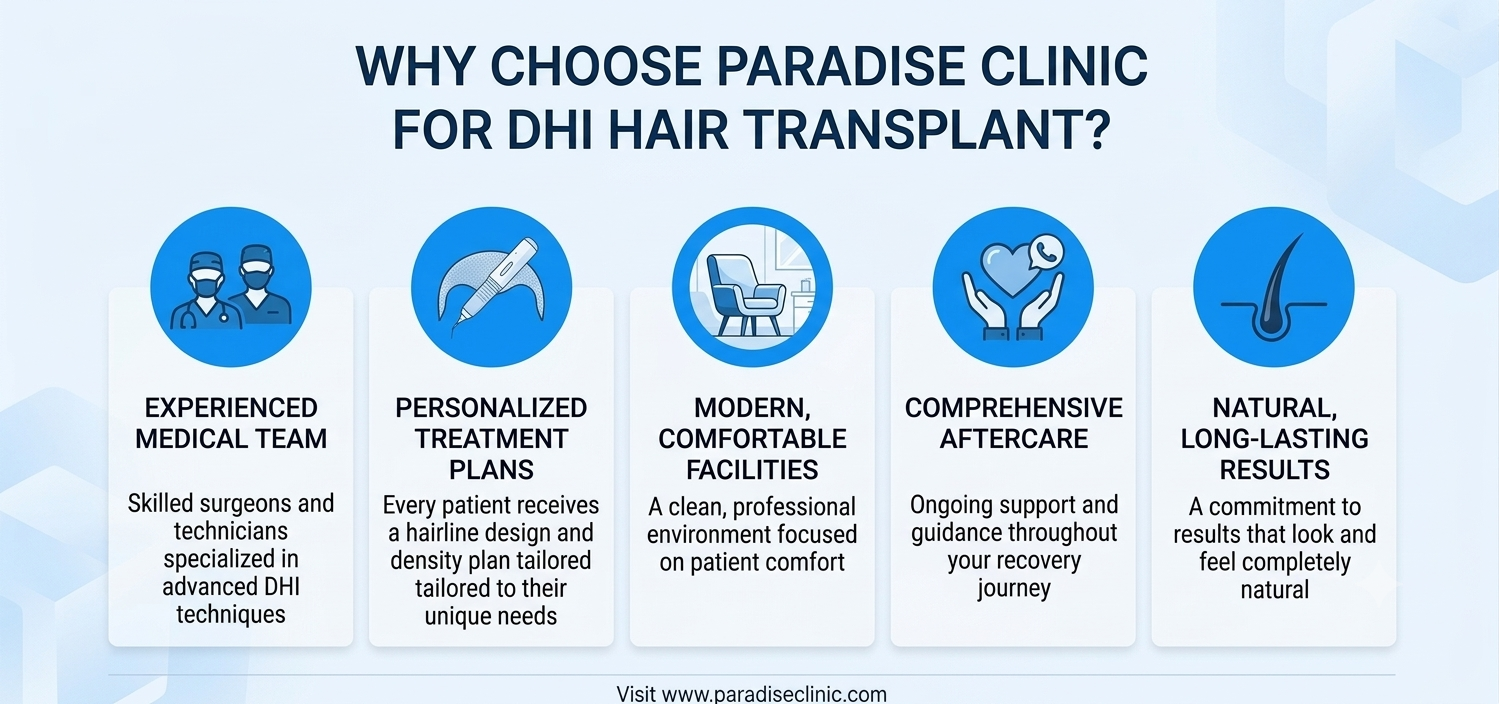
At Paradise Clinic, our experienced medical team specializes in DHI hair transplants, combining advanced technology with personalized care to help you achieve a fuller, more confident look.
What Is DHI Hair Transplant?
DHI stands for Direct Hair Implantation, an evolution of the traditional FUE (Follicular Unit Extraction) method. The key difference lies in how the grafts are placed.
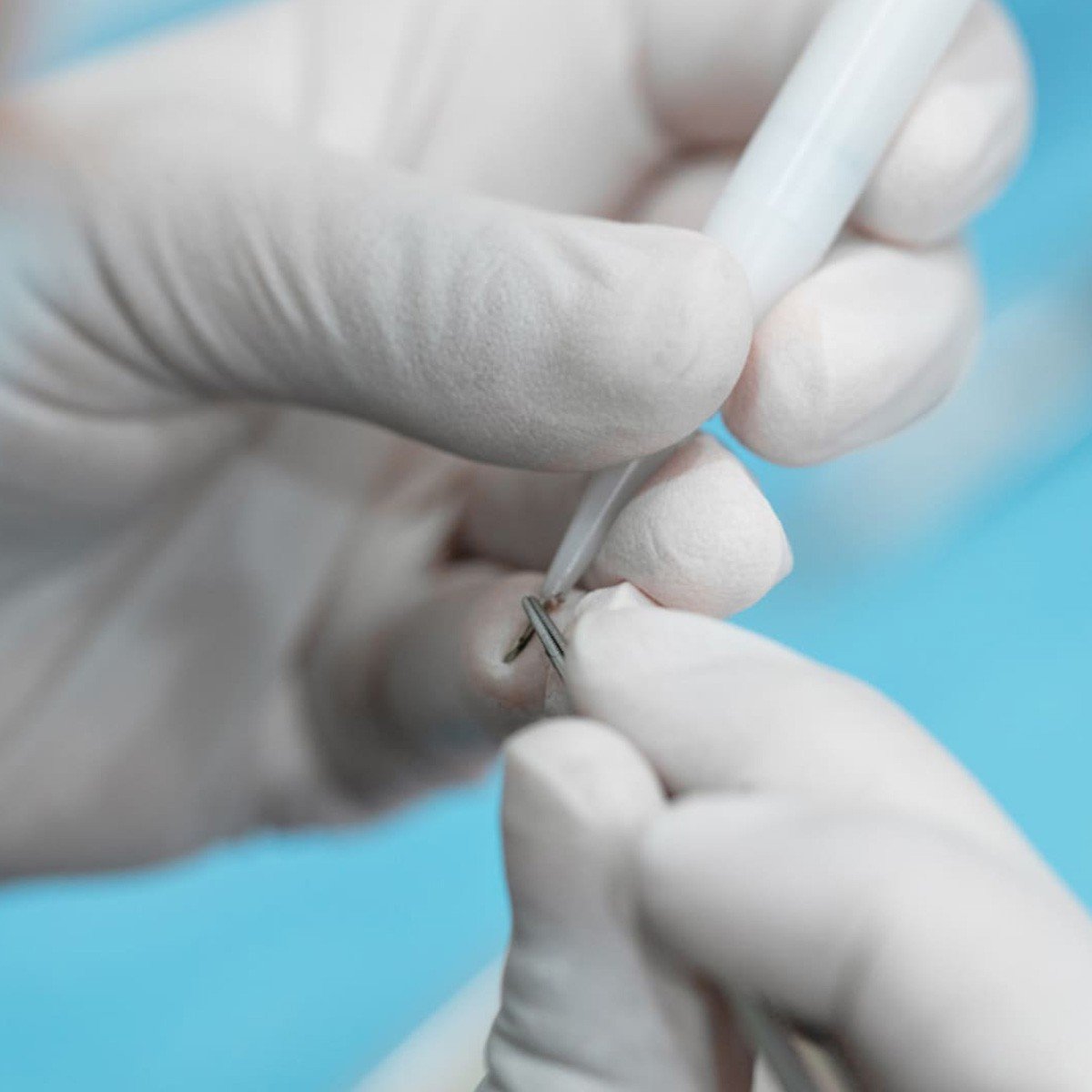
In standard FUE, the surgeon first creates tiny incisions (channels) in the recipient area, and grafts are implanted afterward. In DHI, hair follicles are extracted and implanted directly into the scalp in a single step, using a specialized tool called an implanter pen (also known as a Choi pen).
This direct approach allows for greater control over the angle, depth, and direction of each hair, resulting in a more natural appearance and the ability to achieve higher density in targeted areas.
Consultation & Planning
Our specialists assess your hair loss pattern, donor area, and goals to design a customized hairline and density plan.
Local Anesthesia
The donor and recipient areas are numbed to ensure a comfortable, pain-free experience.
Graft Extraction
Healthy hair follicles are carefully extracted from the donor area (usually the back or sides of the scalp) using a fine micro-motor punch.
Recovery Guidance
Patients receive detailed aftercare instructions to support healing and optimal results.
Direct Implantation –
Each graft is loaded into an implanter pen and placed directly into the scalp at the correct angle and depth — without the need for pre-made incisions.
Benefits of DHI Hair Transplant
- Natural-Looking Results – Precise control over angle and direction creates a hairline that mimics natural hair growth patterns.
- Higher Density – Grafts can be placed closer together in key areas, improving overall coverage.
- Minimally Invasive – Smaller channel sizes mean less trauma to the scalp, less bleeding, and a more comfortable recovery.
- Reduced Graft Damage – Shorter time outside the body can improve graft survival rates.
- Little to No Visible Scarring – Tiny extraction points typically heal without noticeable marks.
- Faster Recovery – Many patients return to daily activities within just a few days.
DHI Implanter Pen vs. Traditional FUE
| Feature | DHI (Implanter Pen) | Traditional FUE |
|---|---|---|
| Channel opening | Done simultaneously with implantation | Done before implantation |
| Graft handling time | Shorter | Longer |
| Precision of angle/direction | Very high | High, but dependent on pre-made incisions |
| Density control | Excellent | Good |
| Procedure time | Often longer (more time per graft) | Can be faster for large sessions |
Both DHI and FUE are effective, proven techniques. During your consultation, our specialists will recommend the approach best suited to your hair type, goals, and the extent of hair loss.
Who Is a Good Candidate for DHI?
DHI may be an excellent option if you:
- Are experiencing thinning hair, a receding hairline, or pattern baldness
- Have a sufficient donor area with healthy hair follicles
- Want a precise, natural-looking hairline
- Are looking for a minimally invasive procedure with a quicker recovery
- Want to restore density in smaller, more delicate areas such as the temples or crown
A personalized consultation with our team is the best way to determine if DHI is the right choice for you.
Recovery & Results Timeline
- Days 1–5: Mild redness, swelling, and small scabs in the treated area, which gradually fade.
- Weeks 2–4: Transplanted hairs may shed — this is a normal part of the process known as “shock loss.”
- Months 3–4: New hair growth begins to appear.
- Months 6–12: Hair continues to thicken and grow, with final results typically visible around the 12-month mark.
Frequently Asked Questions
Is the implanter pen technique painful? +
The procedure is performed under local anesthesia, so patients typically feel little to no pain during the implantation process itself.
How long does a DHI procedure with an implanter pen take? +
Depending on the number of grafts needed, a session can take anywhere from 6 to 8 hours, sometimes spread across one or two days.
Does DHI with an implanter pen leave scars? +
Since the channels created are extremely small, scarring in the recipient area is minimal to none, and donor-area marks are typically tiny and easily concealed.
Is DHI better than FUE? +
Neither technique is universally "better" — both can deliver excellent, natural results. The implanter pen gives surgeons more precise control over graft placement, which can be especially valuable for hairline design and density.
Is DHI hair transplant painful? +
The procedure is performed under local anesthesia, so discomfort during the treatment is minimal. Some mild soreness in the days following the procedure is normal and manageable.
How long does a DHI procedure take? +
Depending on the number of grafts required, a session typically takes between 6 and 8 hours, and may be completed over one or two days.
Does DHI require shaving the entire head? +
In many cases, DHI can be performed with little to no shaving in the recipient area, making it a popular choice for patients who want to avoid a fully shaved look during recovery.
When will I see final results? +
While initial growth often begins around 3–4 months, full results are typically visible after 12 months, as the new hair continues to thicken and mature.
Is DHI permanent? +
Yes. Hair follicles transplanted from the donor area are genetically resistant to the hormone that causes pattern hair loss, so results are intended to be permanent.
Final Thoughts
The implanter pen is a small device with a big impact on modern hair transplant surgery. By allowing surgeons to extract and implant hair follicles with exceptional precision, it has made DHI one of the most sought-after techniques for patients who want natural, dense, and long-lasting results.
If you're considering a hair transplant and want to learn whether the DHI implanter pen technique is right for you, the team at Paradise Clinic is here to guide you through every step — from your first consultation to your final results.